

Inspired by a traditional style Southern Indian Madras curry it hits all the bases!
The essence of any dish including, this cauliflower & chickpea Madras curry, is the alignment of the spices or flavourings with the ingredients. You also need a good balance of protein and carbs. That means the textures need to either complement, harmonise, or contrast. This dish does all of the foregoing with great success – and makes superb use of a large cauliflower.
What veggies to use and why I chose them for this deliciously succulent dish.
Cauliflower is a lovely vegetable, but it does need some care in how you use it. This oven finished curry gets the flesh infused with curry spices as does the tiny florets. The chickpeas complement & contrast with the soft but firm texture of the texture of the cooked cauliflower. Then the sauce with raisins, cashews, courgette, pepper & aubergine rounds the taste palate out. The banana and coconut milk & cream add some extra exotic Southern Indian notes to hold it all together.
What’s the basic plan of action and work flow to make it successfully?
Start with the onions and garlic first, then adding the other veggies on the go as you chop them. So that’s aubergine, courgette and pepper, followed on after they’ve begun to soften with the curry spices. I use locally sourced mild & medium Madras curry powders with some extra turmeric. After that add the other flavouring adjuncts like onion & garlic powder, nutritional yeast, banana, stock powder, soya sauce etc with the florets going in last. If you do everything in a large oven proof stainless casserole dish you can just put it all in the oven.
Some suggestions on serving this heartwarming Madras style curry.
Most curries including this cauliflower & chickpea Madras curry, work well with long grain brown rice – and this is no exception. As a plain veggie companion – spinach with garlic, or finely shredded cabbage or even steamed carrots or tenderstem broccoli wouldn’t be out of place. As far as accompaniments – hummus of course and mango chutney spring to mind. Another great pairing is these miso glazed aubergine boats (Nasu Dengaku) or spinach with garlic plus garlic mushrooms! As for other main curry dishes try my Indian aubergine & tofu curry, or this chickpea & peanut butter curry. As chickpeas are used extensively in my recipes – buying organic chickpeas and cooking the chickpeas in bulk is a smart move.

Cauliflower & Chickpea Madras Curry
Ingredients
Equipment
Method
- add some coconut oil and or rapeseed oil - preferable cold pressed and organic and put on a low heat so that it's ready for the first ingredients.
- Chop the onions finely - you can blitz them in a food processer if you use pulse carefully, but don't overod it. Add them to the pan and turn up the heat to a low medium

- then chop and crush or blitz the garlic in a mini blitzer/mill - add to the pan and stir in
- then chop the aubergine if you're adding it - into reasonable sized chunks. I but it in half, then into 3 long strips then cut it into chunks so their roughly the same size on each side. Then add to the pan and stir in.

- chop the courgette next and add to the pan

- chop and add the peppers. agains stirring them in.

- slice and add the banana.

- sautee for 5 or so minutes stirring often, and then add all the curry spices, onion powder etc. and stir in and cook on for a few minutes.

- add the coconut milk and chopped or sauteed tomatoes. And coconut cream if you're adding it. Mix well to distribute the curry spices.

- then add the washed and broken up cauliflower florets, and add the soy sauce, stock cubes and stock powder and nutritional yeast.

- add the cashews and raisins

- add the chickpeas

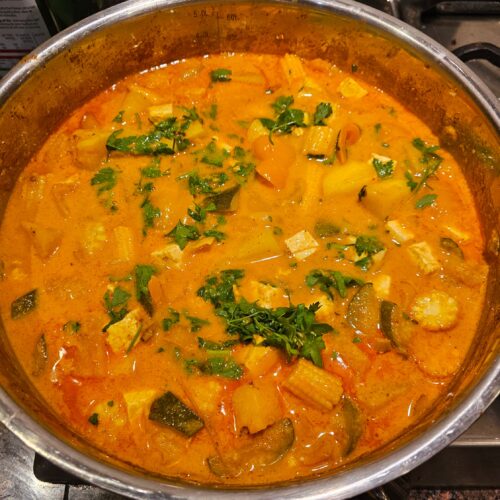
- stir well and then add enough boiling water to bring the water level to just under the florets. It want's to be thick enough to be a sauce, but not too thick. It's a question of jugment. The florets want to be almost submerged but only partly. See picture for an idea of what your aiming for - it definitely doesn't want to be too thin or watery. You can always add more water, but difficult to remove it!

- Bring to a gentle boil, and then put in the oven on 160°C - for 35 to 40 minutes or until the cauliflower is cooked but not mushy - it must still have a bit of texture to it.
- put the rice on - ten minutes after putting it in the oven - and then a couple of minutes before the rice is done - and the cauliflower is almost tender but still with some resistance to a knife - add the chopped corriander for a bit of freshness.